


Art: An Unconscious Revelation of Trauma & Recognising our own Emotional Wounds

Written by: Dr. Maria Z Kempinska, MBE, PhD, MA, BACP
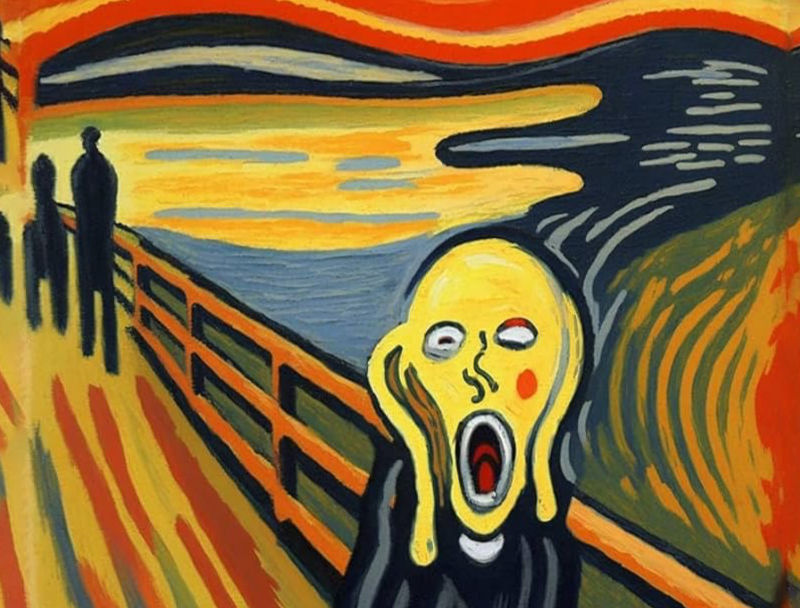
The silent scream resonated with the world.
Your art or writing can reveal trauma that has shaped your life, often
without you being fully conscious of it. By paying attention to unconscious
creative expression through art, doodling, prose, or poetry, you may begin to
uncover what lies beneath the surface. These forms of expression can
become powerful channels for revealing inner feelings, anxieties, and fears
that words alone may not access.
Trauma frequently generates deep anxiety, particularly when it involves loss.
For many reasons, this anxiety can show up as fearful or hypervigilant
behaviour. Whatever the nature of the loss, it is important to understand
that, in most cases, it is not your fault. Trauma is not a life sentence; it can
be understood, managed, and ultimately reconciled.
I use the following painting as an extreme example of loss and creative
expression emerging from profound inner turmoil—an experience that
formed the emotional foundation of Edvard Munch’s life. The traumatic
events themselves deeply affected Munch, but so too did the emotional
environment in which he lived long after the losses occurred.
Edvard Munch was 29 years old when he painted The Scream in 1893. The
renowned Norwegian artist, best known for this iconic work, experiencedsignificant trauma in childhood that profoundly shaped his art. He later wrote
a poem connected to the painting:
“The sky turned blood red…
I stood trembling with anxiety,
and I sensed an infinite scream passing through nature.”
Born in 1863, Munch grew up in a household marked by illness, death, and
emotional turbulence. When he was just five years old, his mother died of
tuberculosis, leaving him and his four siblings in the care of their father—a
strict and deeply religious man whose beliefs were often infused with fear
and negativity. His aunt later came to live with the family. The early loss of
his mother created a lasting sense of vulnerability, sorrow, and depression
that followed Munch throughout his life.
John Bowlby, in Separation and Loss, explains that early traumatic loss or
disruption in the bond with a primary caregiver can create deep
psychological wounds. Such disruptions impair a child’s sense of safety and
may lead to anxiety, disorganised attachment, and long-term emotional
difficulties, including depression, grief, and relational struggles in adulthood.
Munch’s life provides a striking illustration of this theory.
His trauma was not the result of deliberate harm; rather, life unfolded
tragically around him. The loss of his mother was compounded when his
older sister Sophie, his closest companion, also died of tuberculosis at just
15. Her death profoundly affected him. The pattern of loss continued: his
younger sister later developed mental illness, and Munch himself struggled
with chronic illness, depression, anxiety, and an enduring fear of losing his
sanity. He suffered from tuberculosis and lived with persistent concerns
about his mental health.
His father’s rigid, apocalyptic religious fervour added another layer of
emotional strain. Illness was interpreted as punishment for sin, leaving
Munch burdened by guilt and fear of divine retribution. Much of this
emotional torment found expression in his art, particularly after his father’s
death in 1899.
These early experiences of grief, illness, and instability permeated Munch’s
work, which frequently explored themes of anxiety, death, and human
suffering. He once described illness, insanity, and death as the “black
angels” of his life. Art became his means of processing and giving form to
emotional pain rooted in childhood trauma. His unfulfilled love affair with Millie Thaulow, the wife of a distant cousin, plunged him into further despair. His father would have strongly
disapproved, yet Munch was mesmerised by her.
What motivated this relationship? Was it an unconscious attempt to assert independence from his father’s authority or even to punish him retrospectively? Was he drawn
to the unattainable, repeating earlier experiences of loss when Millie ended
the relationship after two years?
Once again, art became his refuge,
bringing anxiety, guilt, and fear to the surface:
“I was stretched to the limit. Nature was screaming in my blood…
after that I gave up hope of ever being able to love again.”
Trauma can be understood, repaired, integrated, and healed with the right
support. Emotional wounds take many forms and occur across all cultures,
backgrounds, and stages of life. Perhaps part of our life’s purpose is to
understand how we were wounded and how that wound might ultimately
be transformed into a source of insight and healing.

So how do we recognise our own emotional wounds?
Difficulties in relationships, where fear of loss leads to pushing others
away
Striving for perfection in relationships, which is ultimately unattainable
A lack of emotional security that destabilises present connections
Repetitive patterns, behaviours, or choices that feel out of alignment
with your values
Fear of financial ruin despite being objectively safe
Ongoing fear of losing relationships without clear cause
Suppressed feelings hidden to please others and avoid conflict
Guilt rooted in misunderstood childhood experiences and carried
unnecessarily into adulthood. Recognising these patterns is often the first and most important step toward healing.
✨ If you’d like to explore trauma work with Dr. Maria, get in touch with us today.

